Hip Dysplasia Dog Bed Comparison: Pressure Testing
By Priya Nandakumar • 11th Mar
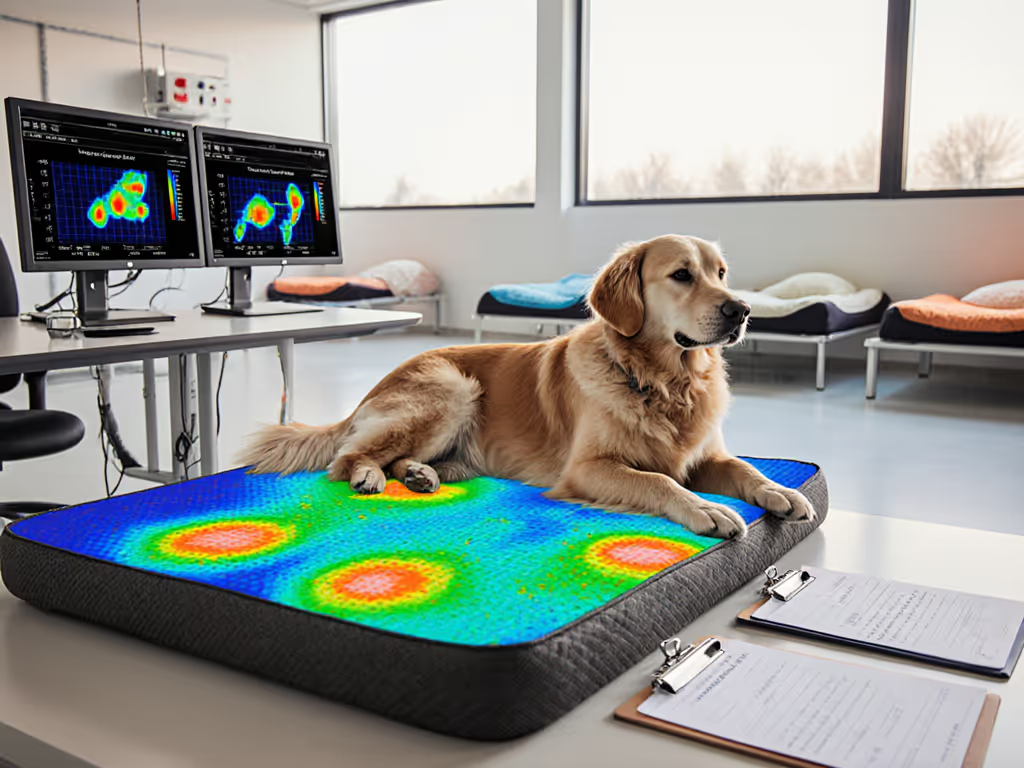
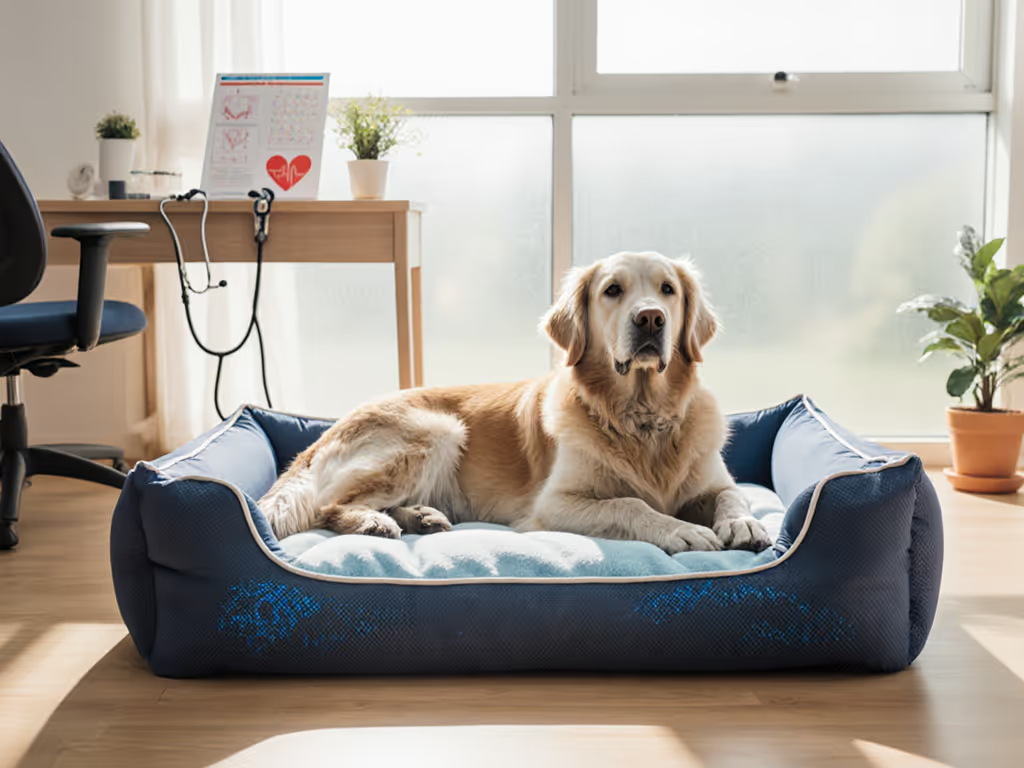
The difference between a generic cushion and a hip dysplasia dog bed designed around pressure distribution isn't marketing; it's measurable relief. When a dog with hip dysplasia lies down, joint laxity means the femoral head doesn't sit snugly in the socket, so pressure concentrates unevenly, compounding inflammation and pain. The right bed doesn't cure dysplasia, but it reduces the daily grinding that accelerates arthritis and steals your senior dog's comfort. Yet most pet parents buy beds on aesthetics or price alone, then wonder why their dog limps by afternoon.
I learned this the hard way: my first "orthopedic" bed was flat as a pancake within three months, the dog preferred the tile floor, and the whole thing went to landfill. What changed everything was tracking the actual cost per night and demanding proof that the foam would hold firm, that the cover could be swapped when it inevitably soiled, and that the design wouldn't let my dog's hips sink into hard floor. This is what a rigorous pressure-distribution dog bed comparison reveals: value is lifespan, not list price.
What Does Hip Dysplasia Actually Do to Your Dog's Joints?
Hip dysplasia is fundamentally a laxity problem: the hip joint has too much play, too much looseness in the socket. Imaging tests measure this using the distraction index, a score from 0 (perfectly tight fit) to 1 or higher (severe looseness)[1]. A score above 0.3 is considered dysplastic[1], and the looser the joint, the higher the risk that your dog will develop osteoarthritis over time[1].
A healthy hip has a "snug but smooth fit, allowing for pressure to be evenly distributed throughout the joint"[4]. Dysplastic hips don't. Instead, weight lands unevenly, concentrated at pressure points where bone grinding accelerates cartilage breakdown. Your dog might not show obvious lameness early, but by day's end, after lying on an inadequate bed, that uneven loading compounds inflammation, stiffness, and pain.
This is why clinical findings matter: young dogs with hip joint laxity often show "lameness that increases during exercise"[3], as well as "hip atrophy, reduced range of motion and pain during flexion and extension"[3]. Your dog's behavior shifts too, with less playfulness, bunny-hopping, difficulty rising, even grunting or whimpering[3]. The bed is where your dog spends 12-16 hours a day; if those hours are spent sinking into unforgiving foam, you're not supporting recovery, you are compounding the problem.
How Does Pressure Mapping Reveal What's Really Happening?
Most "orthopedic" claims are vague. A pressure mapping study using advanced Tactilus sensors took a different approach: researchers placed sensors under dog beds and recorded exactly what pressure points dogs experienced when lying down[2]. Large dogs (a 190 lb English Mastiff and a 92 lb Lab mix) lay on various beds while sensors detected whether weight pushed through to the hard floor below[2].
The findings were stark. Most popular dog beds created painful pressure points: the foam compressed, the dog's weight bottomed out, and the joints bore the floor's unforgiving impact[2]. A bed that appears plush to the eye can fail catastrophically under a 100+ lb dog's weight. This is why hip joint pressure relief isn't theoretical; it's the difference between your dog waking stiff and waking ready to move. For a product-specific example with pressure-relief data, check our PetFusion hip dysplasia bed review.
One vet study found that "70% of dogs showed less joint pain in 30 days" but only with the right bed (the operative phrase being "the RIGHT bed"). Not the most expensive, not the most popular, but the one with sufficient density, proper support across the entire surface, and a core that doesn't collapse.
Pressure Distribution vs. Foam Density: What Actually Matters?
Orthopedic bed density for dysplasia isn't a single number; it's the interaction between foam thickness, density (pounds per cubic foot), and how the bed is engineered to distribute load. A true orthopedic bed works on a principle similar to Pascal's Law: it distributes pressure evenly across the entire surface, preventing concentration at any single point[8].
Density alone doesn't guarantee durability. A 5-pound density foam might feel supportive when new but flatten within months under a medium-large dog's weight. Conversely, cheap high-density foam can be rock-hard, offering no comfort. The sweet spot for dysplasia support is typically 4.5-5.5 lb density with at least 4-5 inches of loft, paired with a second support layer underneath[7].
Where most beds fail: they advertise high density but don't disclose loft retention (how much that foam compresses after 6 months, 1 year, 3 years of nightly use). A bed that starts at 5 inches and sags to 2.5 inches is worthless to a dysplastic dog by year two.
Casing, Covers, and the Lifespan Problem
I've watched owners spend $600 on a bed, have it soiled or torn within a year, and then face a choice: replace the whole thing or live with it. That's poor design and a waste of money and materials.
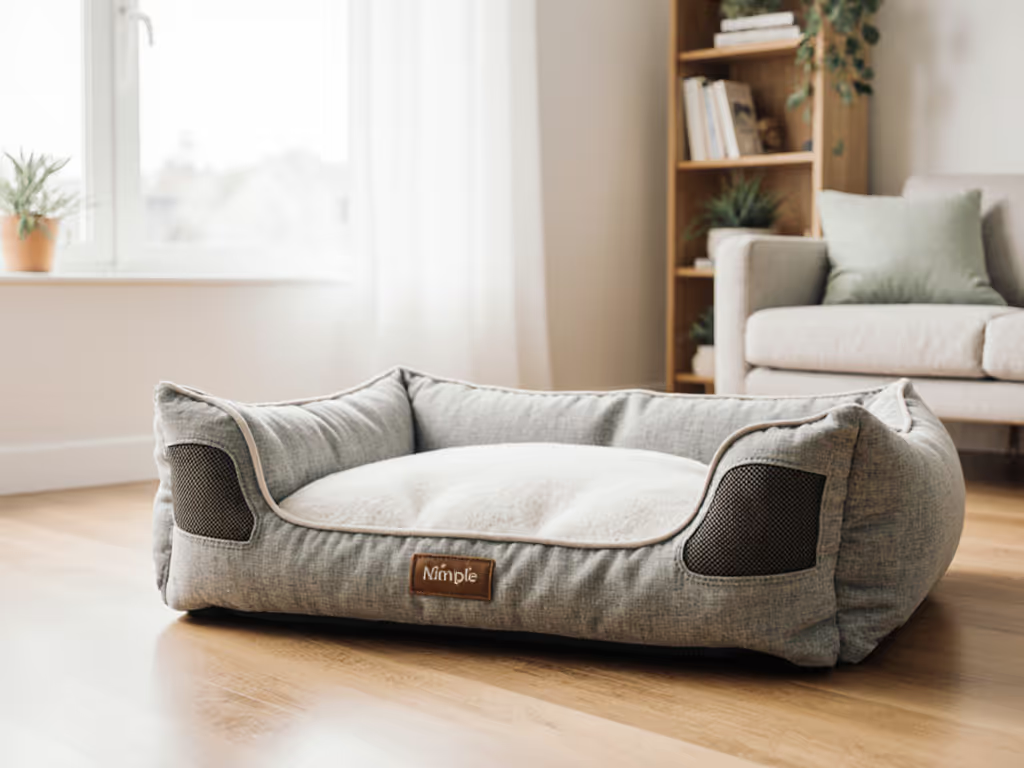
A bed built for a dysplastic dog (built for real longevity) has a removable, washable cover that can be replaced without replacing the core. It has reinforced seams where dogs dig, a non-slip base that doesn't track dirt or slide on hardwood, and fabrics chosen for durability, not just appearance[6]. Machine-washable in a standard or large capacity washer, dryer-safe, quick-drying. A waterproof inner liner catches accidents without soaking the foam.
Optional spare covers should be available at reasonable cost. A $30 spare cover means you can wash one while the dog sleeps on another (no downtime, no panic). Without this option, a single stain or accident becomes the reason to discard a $500 bed. Spend once, maintain smart, and skip the landfill; this is the calculus that separates a disposable purchase from a durable investment.
The Dog Bed Step and Accessibility Factor
A dog bed step (a low ramp or built-in step edge) isn't a luxury for dysplastic dogs; it is load-bearing design. A dog with joint pain shouldn't be vaulting onto a raised bed or straining to climb into a tall-sided cushion. A gentle, non-slip step edge (2-3 inches high) allows a dysplastic dog to enter the bed at a natural angle, reducing compression through the hip joint during entry and exit. For joint-specific recommendations, see our hip vs shoulder support guide for raised orthopedic beds.
Cheap beds have thin, loose bolsters that collapse under weight; proper designs integrate structural support at edges so the step remains firm across years. If your dog is large-breed or senior, inspect whether the bed's edges will hold weight without degrading.
Testing Durability: What to Ask Before Buying
When comparing beds, demand transparency on these metrics:
- Foam density and loft retention: What is the starting density, loft height, and measured compression after 3 years of nightly use?
- Pressure mapping data: Has this bed been tested with pressure sensors under large dogs? Are results available?
- Wash cycle durability: Can the cover withstand 50+ hot-water washes without pilling, fading, or seam separation? We lab-tested this in our machine-wash durability comparison.
- Base grip and slip resistance: Will this bed slide on your flooring type (hardwood, tile, carpet)?
- Edge durability: Do the bolsters or side walls remain firm, or do they flatten within months?
- Fabric composition: Is it tear-resistant, hair-shedding, chemically safe (certified CertiPUR-US or OEKO-TEX for foams and fabrics)? Not sure which certification matters more? Read our OEKO-TEX vs CertiPUR-US breakdown.
- Replacement parts availability: Can you buy spare covers, replacement liners, or foam layers?
- Trial period: Can you return it within 30-60 days if your dog doesn't settle or if it fails to reduce visible lameness or stiffness?
Most brands won't have all this data. The ones that do are designing for longevity, not quick sales.
From Diagnosis to Bed Selection: A Practical Path
Hip dysplasia dog bed comparison begins with confirmation. If your vet suspects dysplasia, radiographs (X-rays) are the standard diagnostic tool[3][4]. Proper positioning and a board-certified orthopedic specialist can improve accuracy; if radiographs are unclear, sedation may be needed for better quality imaging[4].
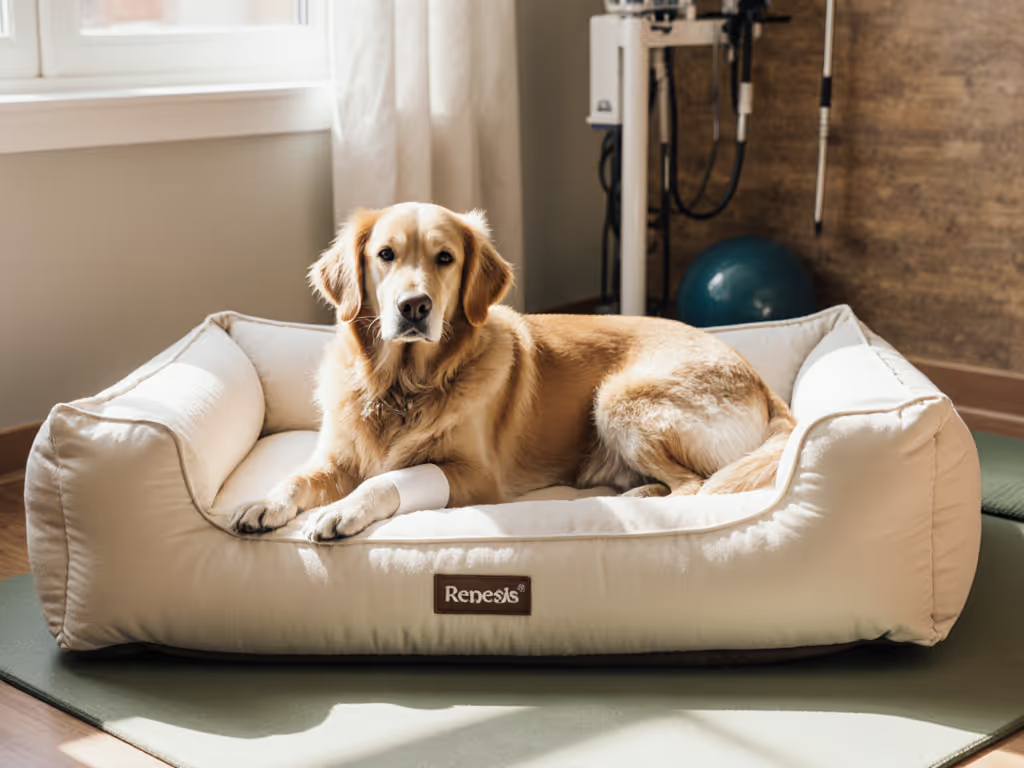
Once confirmed, your vet may recommend a combined approach: joint supplements, controlled exercise, pain management, and physical therapy. A pressure-distributing bed is the silent partner in this regimen (it works 24/7 while your dog rests, preventing the inflammatory cascade that compounds arthritis risk).
Measure your dog's sleeping footprint (length from nose to tail base, width of sprawl), identify your floor type (hardwood slides differently than carpet), and note climate (overheating exacerbates joint inflammation in summer; cold stiffens dysplastic joints in winter). A cooling gel layer may help; a thermal option may help winter comfort. Choose neutral colors and durable fabrics that won't clash with your home or degrade in 6 months.
The Total Cost of Ownership Calculation
A $300 bed that collapses in 14 months costs $257 per year. A $500 bed with a replaceable cover that functions well for 4 years, with one $50 spare cover purchase midway, costs $138 per year. If that second bed meaningfully reduces your dog's pain medications or vet visits for flare-ups, the ROI is even clearer.
Track it: cost per night. My flattened bed cost roughly $15 per night before I admitted it wasn't working. The durable one I eventually chose, with a replaceable core and washing protocol, ran about $0.40 per night across three years. That spreadsheet changed my buying entirely.
Actionable Next Steps
- Get a confirmed diagnosis from your vet with radiographs and an orthopedic assessment. Know your dog's distraction index if possible; it helps you understand severity.
- Measure and document your dog's sleeping style: Is your dog a sprawler, a curler, or a burrower? Measure full length, width, weight, and any orthopedic concerns beyond hips.
- Request pressure mapping or durability data from bed manufacturers. If they don't have it, ask why. Transparent brands will share wear tests, loft retention graphs, and wash cycle data.
- Prioritize replaceable covers and spare parts availability. A bed without this option is not built for durability, it's built for replacement.
- Compare cost per night across the bed's expected lifespan, not the sticker price. Factor in spare covers, potential repairs, and cleaning convenience.
- Test within a trial window (30-60 days). Real evidence of your dog settling, reduced morning stiffness, and visible comfort beats any advertisement.
- Plan a maintenance schedule: wash covers every 4-6 weeks (if soiling requires), replace covers every 2-3 years, and monitor foam loft over time. A bed is not a "set and forget" purchase; it requires smart maintenance.
Value is lifespan, not list price. A dysplastic dog deserves a bed engineered to last, built to distribute pressure where it matters, and designed so you can actually maintain it without surrendering the whole thing to the landfill after a single accident or a few years of wear. That's not luxury, that's responsibility.
Related Articles