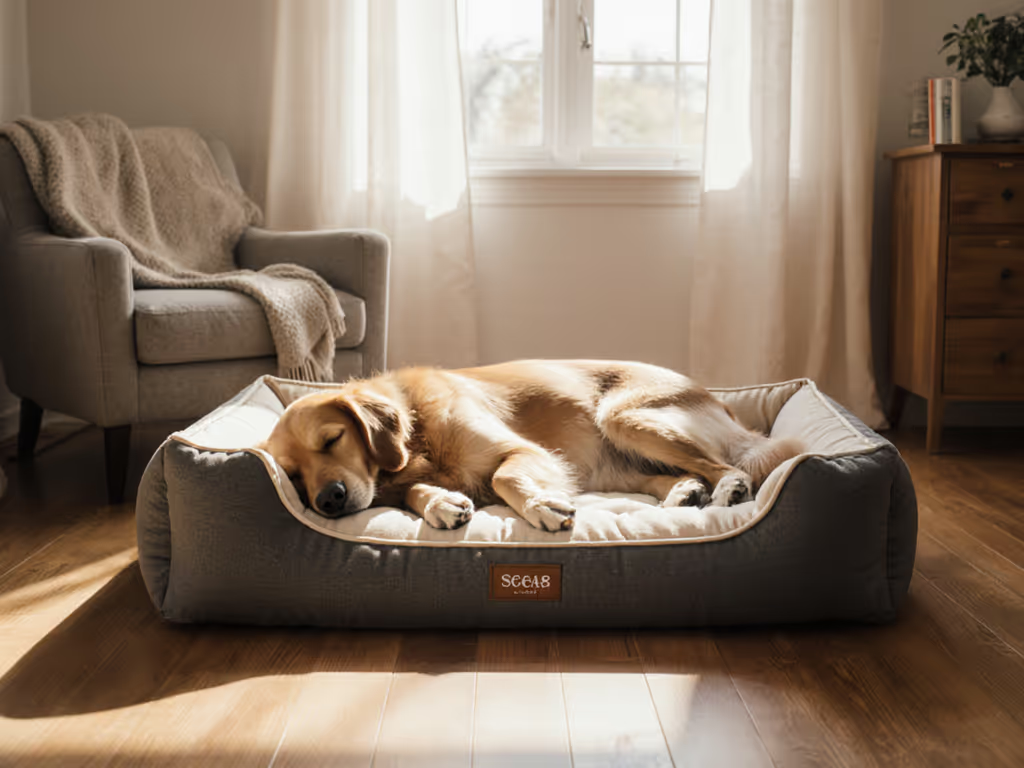
Canine Sleep Science: Design Your Dog's Perfect Bed
By Luca Cheng • 24th Apr
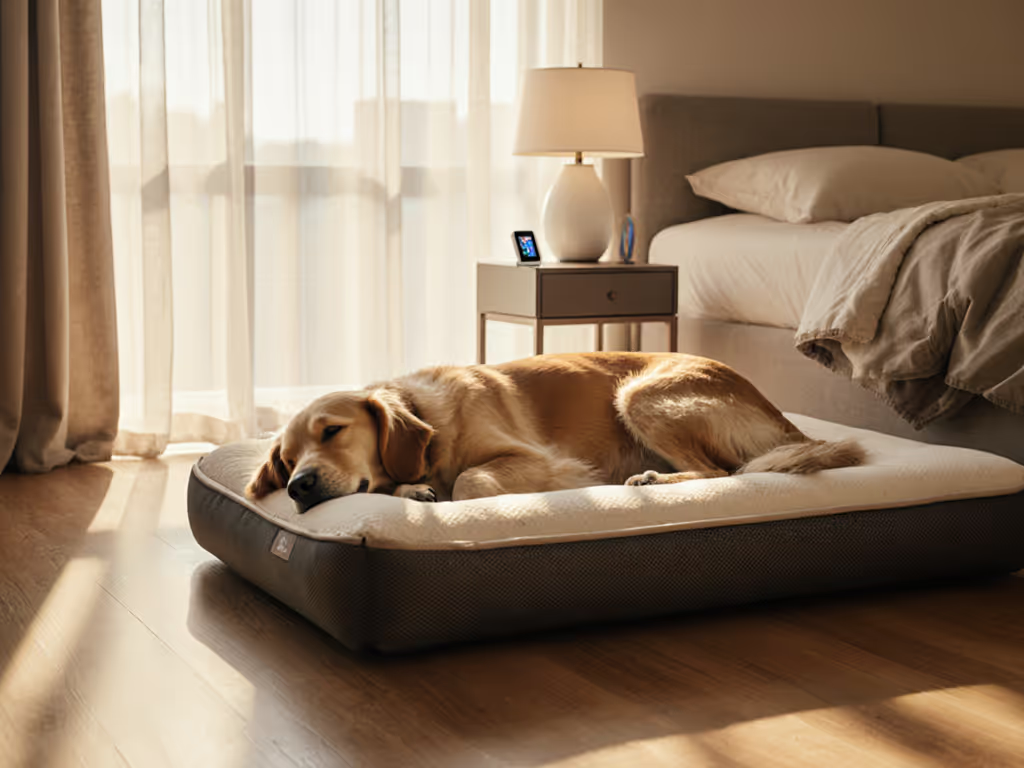
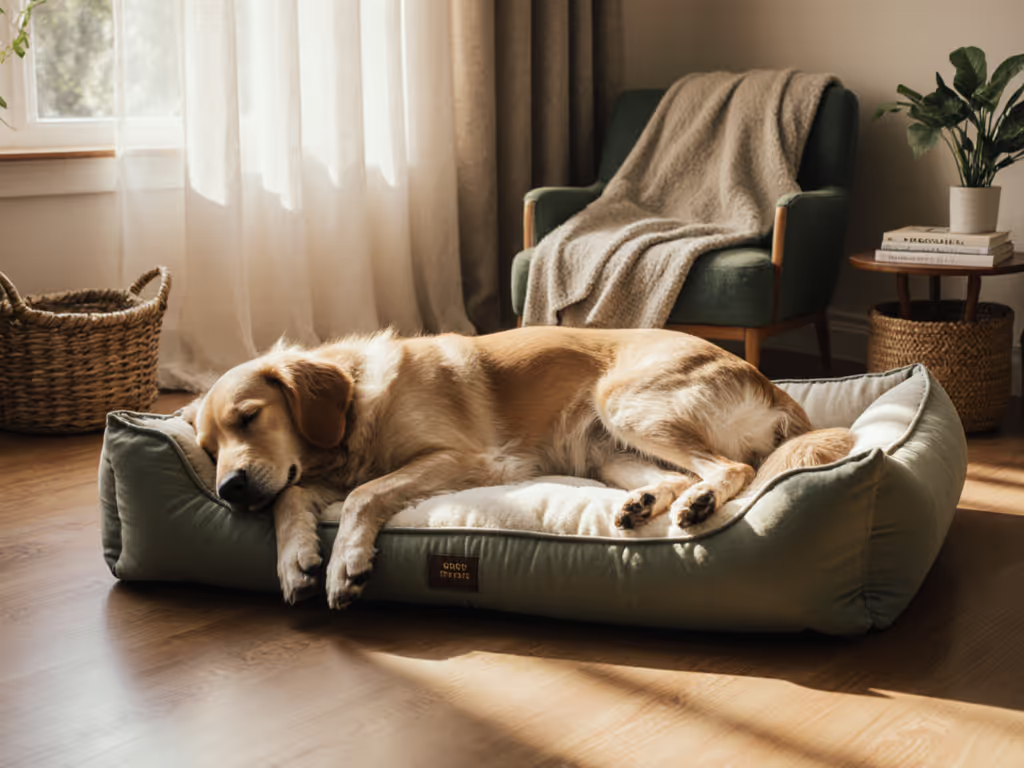
Canine sleep science reveals a truth that changes everything about how you choose a dog bed: your dog's sleep is not like yours. Humans consolidate sleep into one long block, cycling through stages in roughly 90-minute sequences. Dogs, by contrast, follow a polyphasic pattern (fragmented across night and day), and their sleep cycles operate differently at every phase.[1][3] Understanding this architecture isn't just biology; it's the blueprint for selecting a bed that actually gets used and loved daily.
For most dog owners, the default assumption is straightforward: a bed is a bed. Pick a size, watch it flatten after six months, and repeat. But when you understand the specific physiological work happening during each stage of your dog's sleep, the design choices become obvious. The bed isn't just comfort, it's a performance surface that either supports or sabotages your dog's recovery, learning, and emotional processing. This distinction explains why some dogs ignore expensive beds while gravitating toward a worn rug: the surface wasn't engineered for how they actually sleep.
Sleep Architecture in Dogs: Why It Matters for Bed Selection
Dogs spend roughly 60-80% of their night sleeping (typically between 9 p.m. and 6 a.m.), with additional daytime naps concentrated in the afternoon.[2][5] But where they sleep is only half the story. How they sleep (the specific brain activity and physiological processes unfolding) determines what a bed must deliver.
NREM (Non-REM) Sleep: The Restoration Phase
During NREM sleep, the dog's body enters restoration mode. Growth hormone is released, supporting tissue repair and muscle recovery. The immune system strengthens through increased cytokine production. Heart rate and breathing slow, allowing cardiovascular recovery, and metabolic waste products are cleared from the brain.[3] For dogs recovering from exercise, illness, or injury, NREM sleep is where genuine healing happens.
This is why a bed that causes heat buildup is not just uncomfortable, it's sabotaging recovery. When polyurethane foam or heat-trapping materials prevent the body's natural temperature decline, they disrupt the biological signals that trigger deeper sleep stages. Studies on human sleep confirm that heat-retaining mattress materials reduce time spent in deep sleep; the same principle applies to dogs, whose core temperature regulation during sleep follows similar patterns.[3]
REM Sleep: The Cognitive and Emotional Processing Phase
Dogs spend roughly 10-12% of their sleep time in REM sleep (rapid eye movement sleep).[3] This is where memory consolidation happens, where yesterday's lessons are filed away into long-term knowledge. In fact, research from Hungary tracked dogs learning new commands and found that the number of "sleep spindles" (bursts of electrical activity in the 9- to 16-hertz range) directly correlated with how well the dogs learned.[1] The spindles occur during deeper sleep, and they're fragile: any discomfort during REM can pull the dog back toward wakefulness.
Here's the critical detail: during REM sleep, dogs are most physiologically vulnerable. Muscle tone decreases, so they can't easily reposition themselves, and sensory awareness drops. If the bed is causing discomfort (pressure points from inadequate support, heat trapping, or chemical irritation from fabric treatments), the dog's body must choose between staying in restorative REM or waking to address the discomfort.[3]
Position Changes, Pressure Points, and Sleep Consolidation
Dogs change sleeping positions an average of 15-25 times per night.[3] Each position shift is a micro-waking event. The fewer forced changes, the more consolidated the sleep, and the deeper the restorative cycles.
Beds with poor pressure distribution force more position changes. For support that reduces pressure points, see our orthopedic vs memory foam comparison. When weight concentrates on the hips or shoulders, discomfort builds until the dog shifts. Foam beds that have lost structural loft (which happens quickly under daily use in high-traffic homes) create more pressure points, which means more micro-wakings, which means fragmented sleep and compromised learning and immune function.[3]
A bed that maintains even support across the dog's body length reduces unnecessary position changes and deepens sleep consolidation.
This is where the relationship between canine sleep architecture and bed engineering becomes visible. The bed isn't just a cushion; it's a tool for maintaining stable, uninterrupted sleep cycles.
Thermal Regulation and Fabric Choice
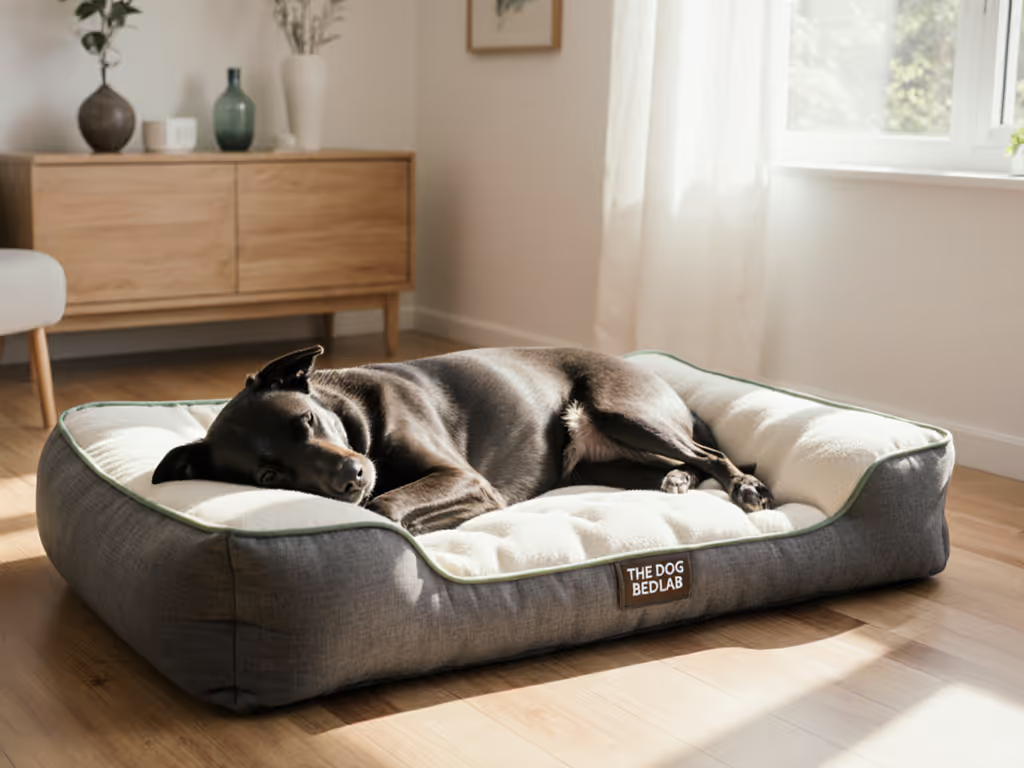
Body temperature drops naturally during sleep. This temperature decline is a biological trigger that signals deeper sleep stages. Memory foam is a notorious heat trap (polyurethane has poor thermal conductivity and absorbs body heat, holding it against the dog's body surface).[3] In warm climates or for dogs prone to overheating, this can reduce total time in deep sleep and accelerate wake-ups. Our lab-tested cooling dog beds compare breathability, washability, and real comfort in hot weather.
Conversely, in cold climates or for dogs that seek burrow-style nests, insufficient insulation disrupts the same process. The fabric choice matters as much as the core fill:
- Low-snag, breathable fabrics (linen-cotton blends, performance textiles) allow airflow and dry quickly after cleaning
- Moisture-wicking weaves pull sweat away from skin, preventing heat traps
- Tightly woven bases prevent dust mite accumulation, which matters for dogs with sensitivities
- Non-slip finishes keep the bed anchored on hardwood or tile, preventing the micro-instability that triggers waking
Designing the Bed Into Your Space: Making Sleep Intentional
Sleep science explains what the bed must do. But a bed that sits unused teaches nothing. This is where intentional placement and visual alignment transform a piece of furniture into something your dog actually claims. Get room-by-room advice in our optimal dog bed placement guide.
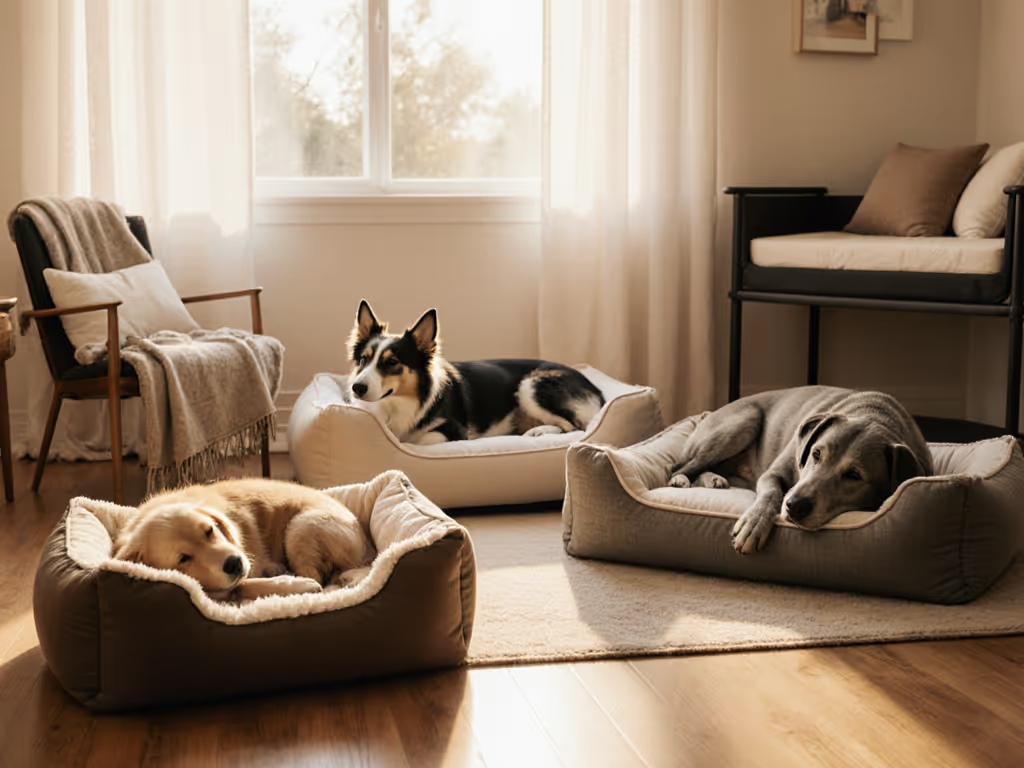
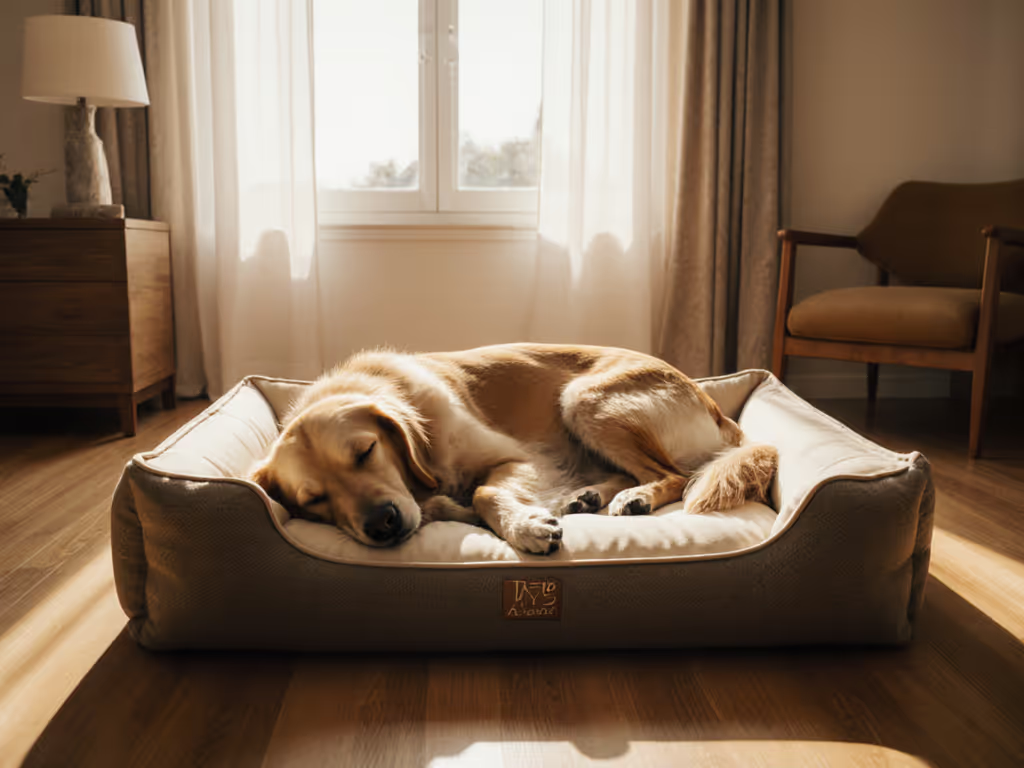
Consider your room as a system: traffic flow, visual cues, and textural echoes all signal to your dog whether a space feels safe and intentional. In a smaller footprint, a low-profile frame with a color or texture that repeats an existing rug or bookshelf creates a sense of belonging. The bed becomes part of the room's visual logic, not an afterthought in the corner. When the dimensions and proportions respect walkways and sightlines, the dog's nervous system registers stability. A bed that wobbles or sits at an angle to the room's geometry triggers vigilance, not rest.
Make the bed part of the room. This means:
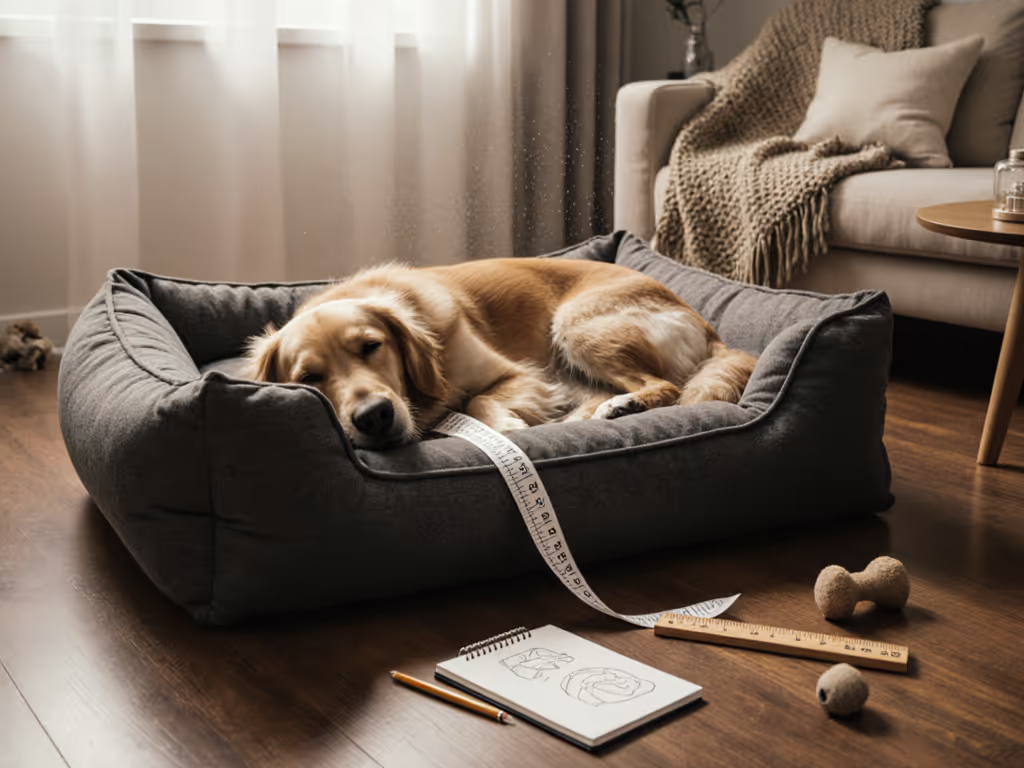
- Dimension callouts: Measure your dog's length when fully stretched, then add 6-12 inches for comfort. Cross-reference that against room layout and typical traffic patterns. A sprawler needs unobstructed length; a curler can tolerate a more compact footprint.
- Fabric and finish alignment: Match textile weight and sheen to existing furniture. A matte, linen-like finish integrates better than a glossy, synthetic sheen in a room with natural wood and soft textiles.
- Placement logic: Position the bed where your dog already gravitates, near the main living area if they're social, in a quieter zone if they're sensitive. Observe their pre-sleep behavior for a week before buying.
Connecting Sleep Quality to Bed Selection: A Practical Framework
The relationship between dog bed engineering and restorative sleep isn't abstract: it directly shapes which features matter:
- Orthopedic support density: A bed that maintains loft over years, not months, sustains the pressure distribution needed to reduce position changes.
- Thermal properties: Match the fill and cover to your climate and your dog's temperature preference (hot sleeper vs. cold sleeper).
- Durability of seams and zippers: Reinforced construction prevents seam separation and keeps filling contained, which means consistent support over time.
- Washability and odor control: True machine-washable covers and fast dry times mean the bed returns to service quickly, reducing the temptation to let it sit soiled (which introduces dust mites and allergens that disrupt sleep).
- Stability and slip resistance: A non-slip base prevents the micro-movements that jar a dog awake and fragment sleep cycles.
Toward Better Sleep: What to Test Before You Buy
The science points to measurable criteria. Before committing, seek transparency:
- Ask for compression and loft retention data. How much does the foam compress under load, and what percentage of loft remains after 30, 60, and 90 days of use?
- Request real-home photos and wear-test results. Marketing images don't reveal how a bed behaves in your specific climate and traffic scenario.
- Clarify heat retention. Does the manufacturer test thermal conductivity? What's the expected temperature differential between the bed surface and ambient room temperature?
- Confirm machine-wash protocols. Is the cover truly dryer-safe, or will shrinkage ruin the fit? How long does the cover take to dry? For step-by-step cleaning that preserves support, follow our washable dog bed care guide.
- Verify edge support metrics. Does the perimeter maintain structure when a 50- or 80-pound dog leans or sleeps on the edge?
A bed that earns a spot in your living room is one that passes these tests, not once, but consistently over months and seasons.
The Bigger Picture: Sleep as a System
Your dog's bed isn't isolated from the rest of their life. It's connected to their daily activity patterns (which peak in early morning and evening, according to baseline research on healthy adult dogs), their emotional state, and their physical recovery from play, training, or aging.[4] A bed designed with sleep science in mind (one that manages heat, maintains support, and anchors stability) removes friction from the sleep process. Your dog rests deeper. They learn better. They recover faster.
The work of selecting that bed doesn't end with size and color. It begins with understanding the specific physiology happening when your dog sleeps, translating that into design criteria, and testing whether a candidate bed actually delivers against measurable standards. Request the data. Compare compression curves, thermal conductivity reports, and wash protocols the way you'd evaluate any purchase in your home. This isn't overthinking; it's the difference between a bed that looks good and one that your dog chooses, night after night, because it feels good, and because it was chosen for how your dog sleeps, how your room lives, and how the two fit together.
Related Articles